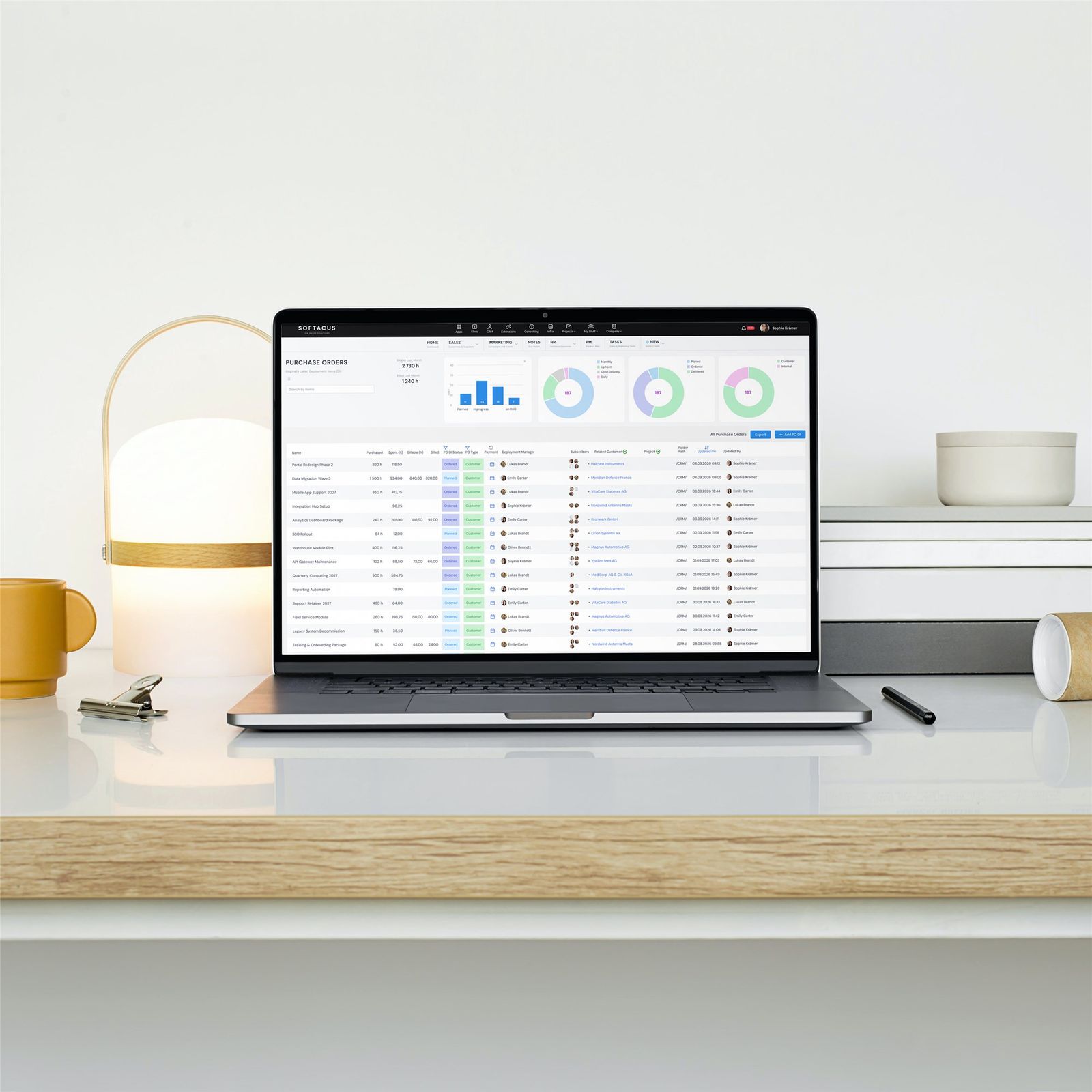
Customers, sales, billing and daily operations often run in separate tools. Softacus CRM, built on ELWIS, brings companies, leads, opportunities, quotes, invoices and projects into one connected platform — a single source of truth for sales, finance and operations.
The problem
Sales activities, customer records, quotes and invoices lived in separate systems, while projects and time tracking ran on team-specific processes. Nobody could see the complete customer journey from first contact to delivery — and reporting meant collecting data from six different places before any decision could be made.
01
Where is the latest information about this customer?
02
What is the status of this opportunity or invoice?
03
Has this request been handled — and who owns the next step?
04
How is the business performing right now?

Central customer system
Customers, leads, opportunities and deals in one place.

Connected sales flow
From quote through invoicing to delivery in one platform.

Less manual work
No duplicated data entry between departments.

Business visibility
Real-time dashboards, KPIs and reports for every team.

Internal processes included
Projects, time tracking, HR and expenses alongside customers.

Open integrations
Connects to email, automation and analytics tools.
Key features
The capabilities that replaced six disconnected sales, finance and operations tools.
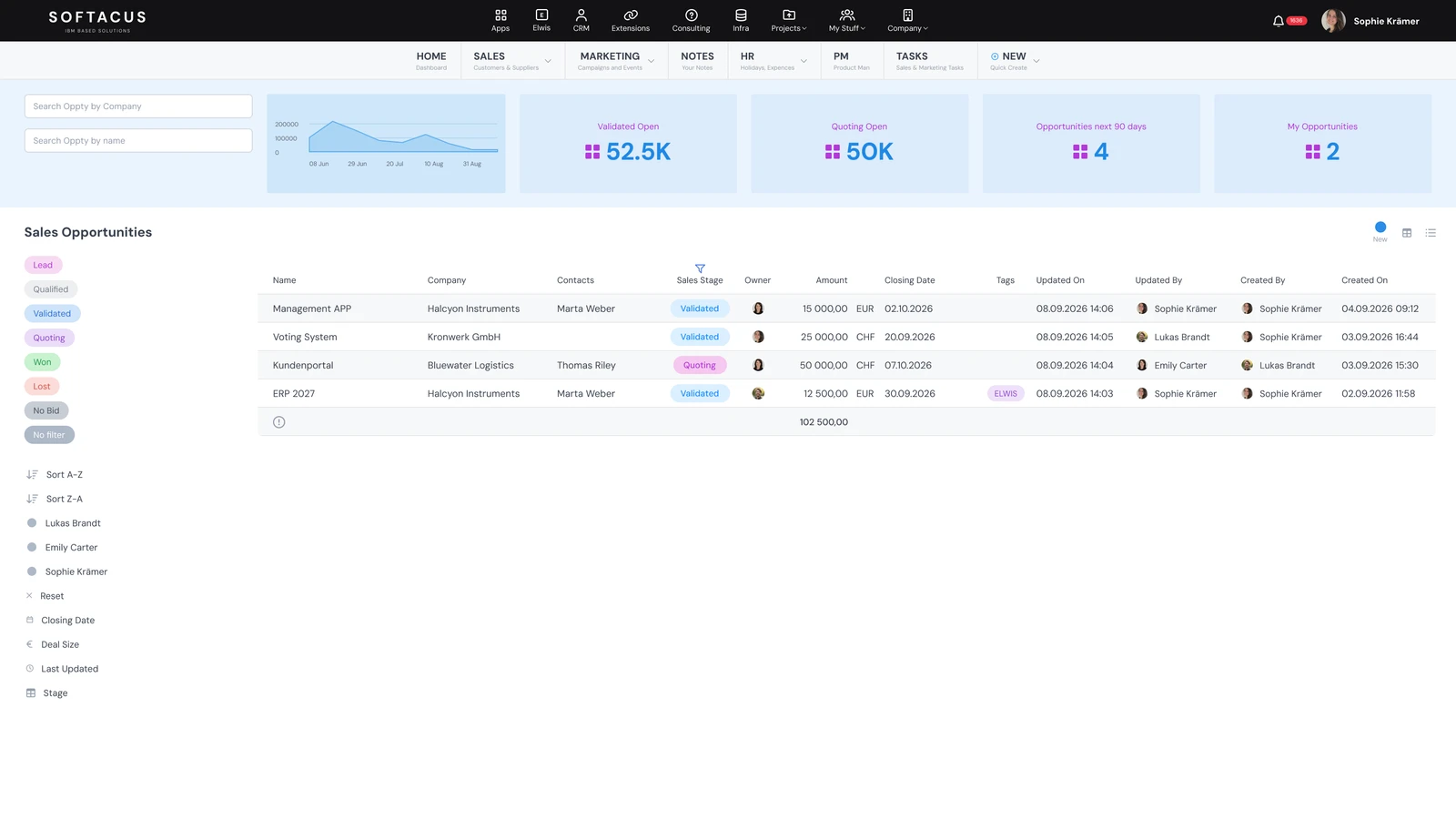
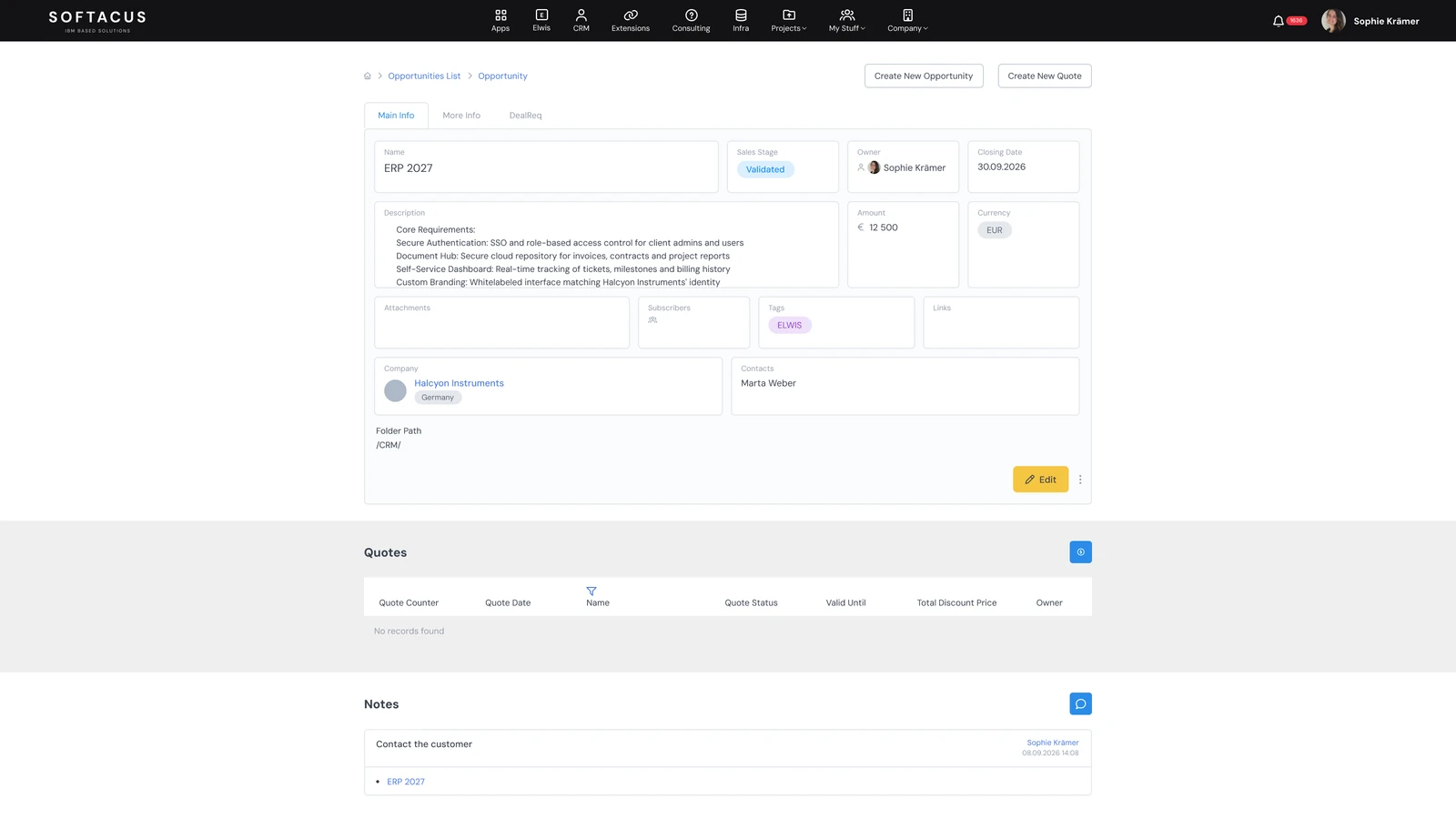
SALES
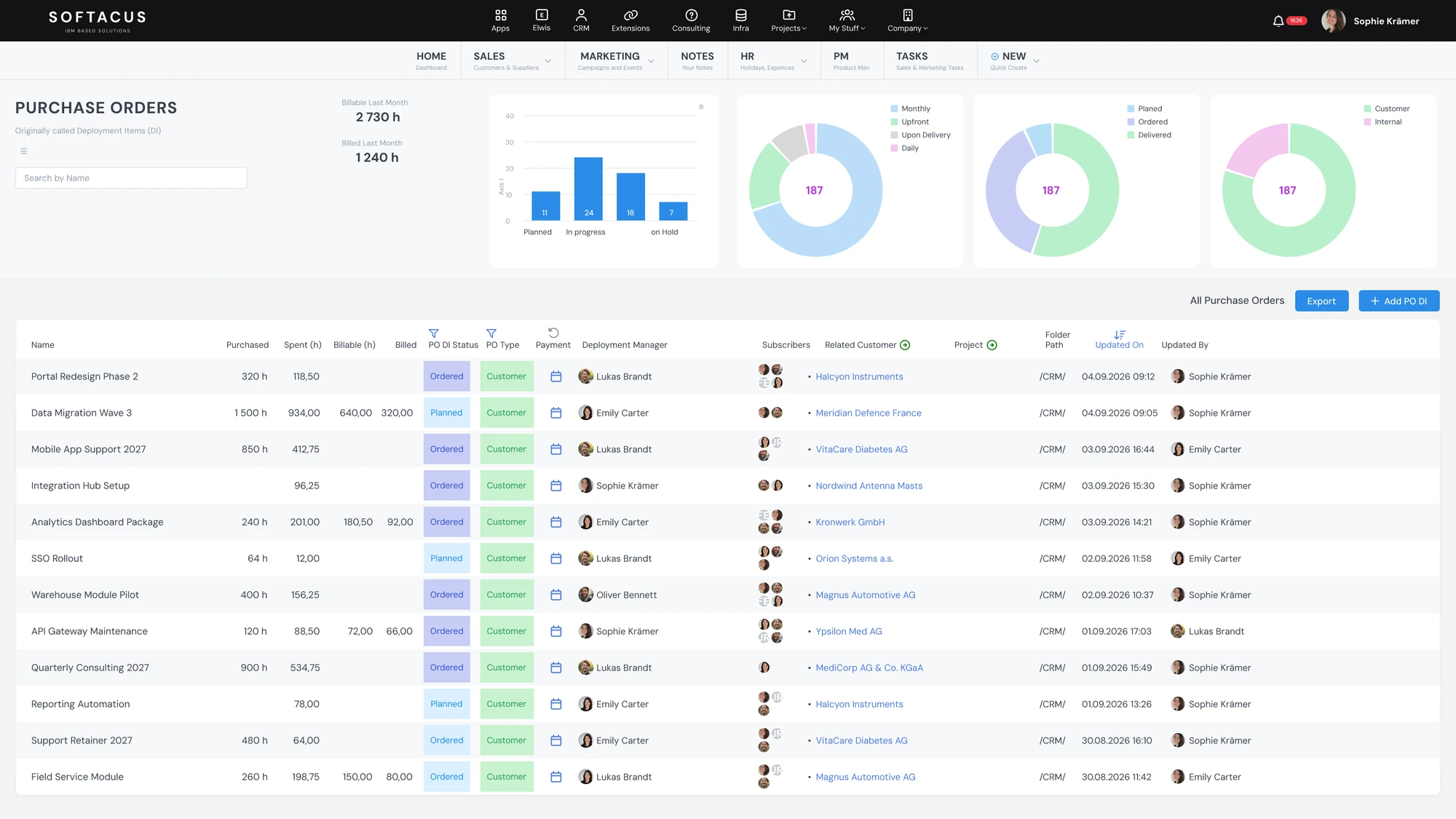
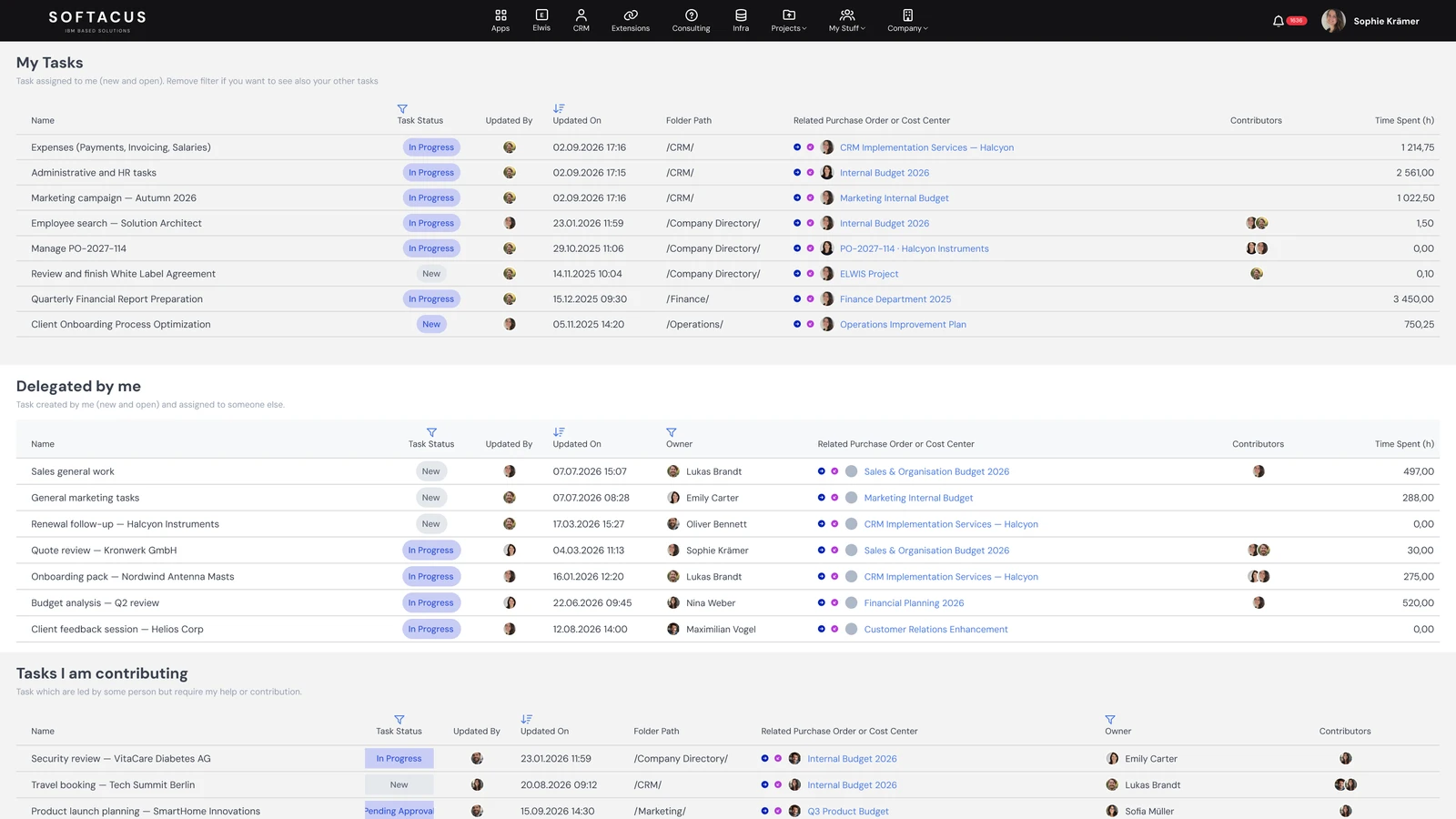
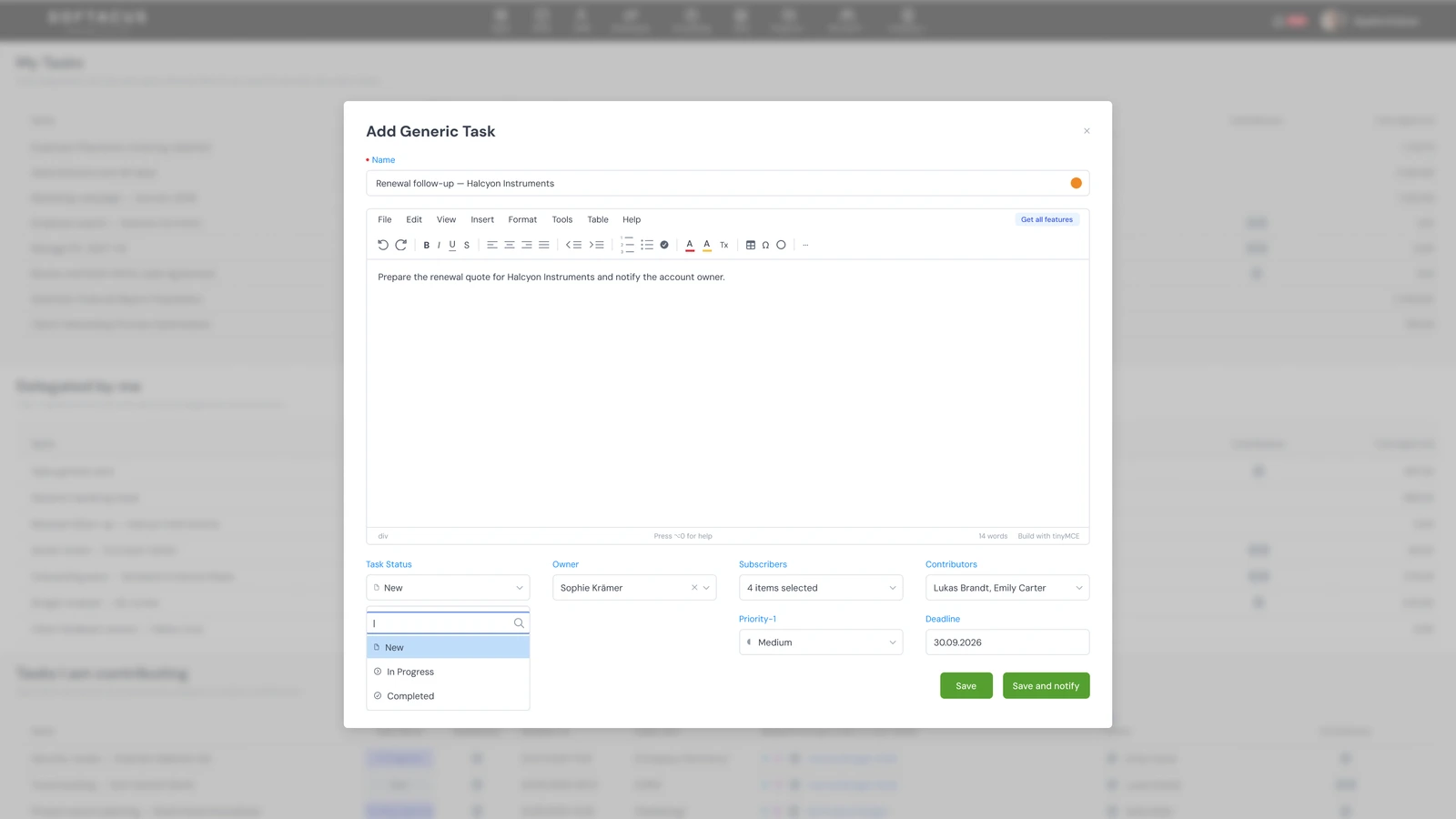
Sales opportunities, projects and daily tasks are managed within a single workflow. Users assign responsibilities, monitor progress, track deadlines and receive automatic reminders — nothing falls through the cracks, and accountability improves across the team.
COLLABORATION
Integrated communication and instant notifications about task updates, project changes and important customer activities. Instead of disconnected email chains, teams stay aligned through a shared workspace with real-time visibility.
CRM
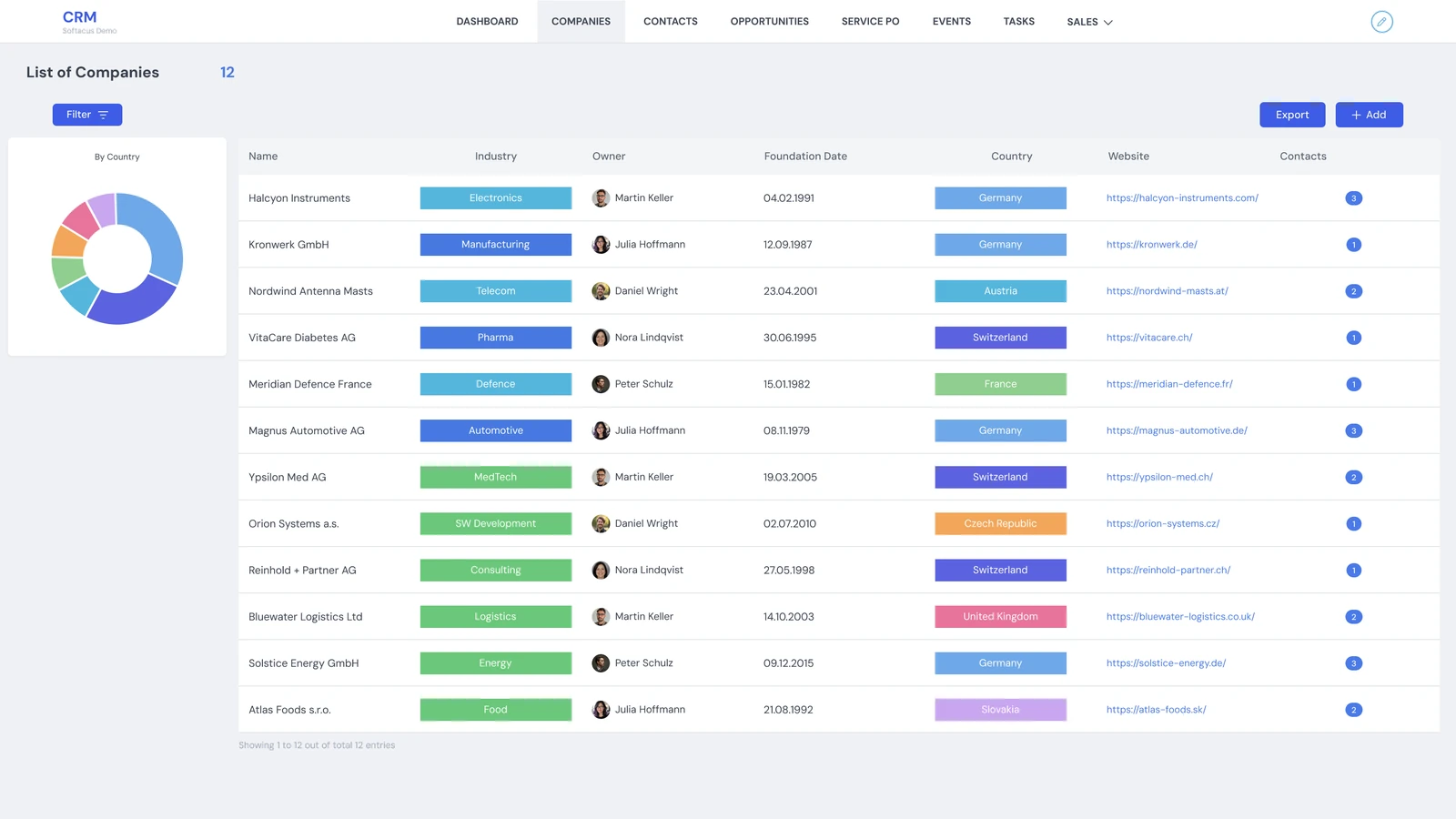
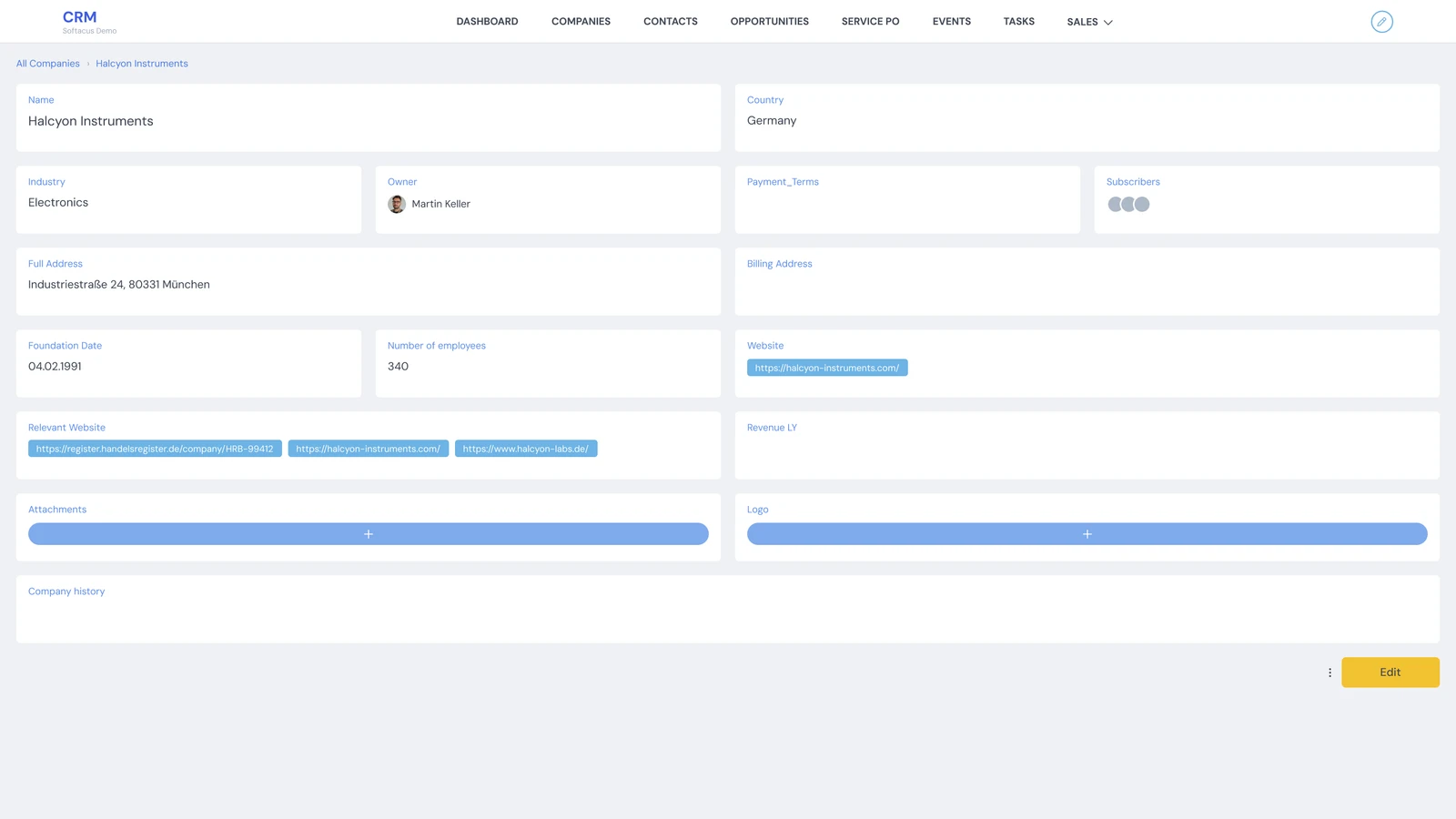
A centralized workspace for customer accounts, contacts and interaction history. Every communication, meeting and activity is stored in one place — complete visibility into relationships, replacing scattered spreadsheets, emails and personal notes.
AUTOMATION
Repetitive processes, notifications and data updates run automatically, while integrations with existing business systems eliminate duplicate work. Connected information streamlines daily operations and improves data consistency across the organization.
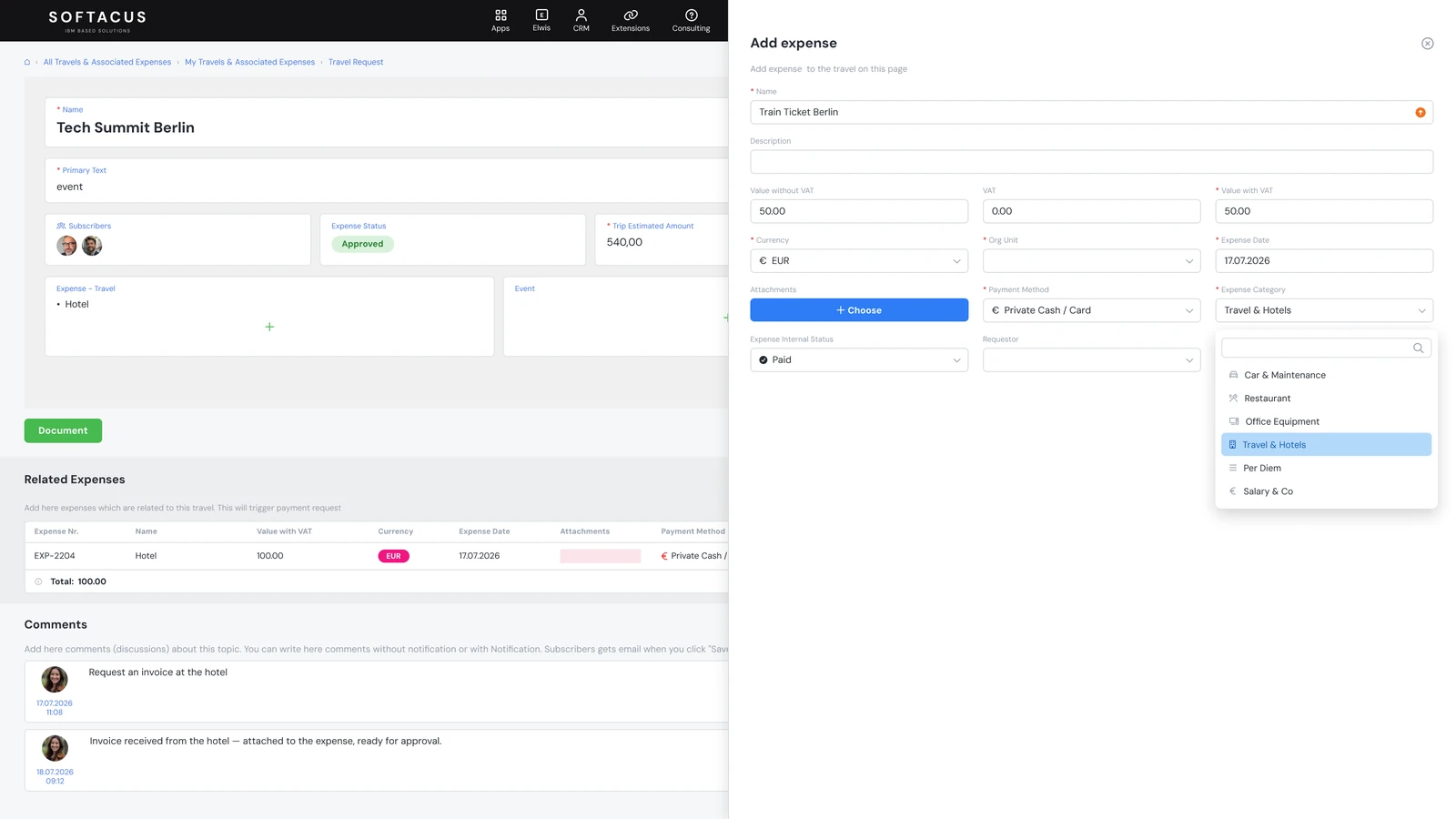
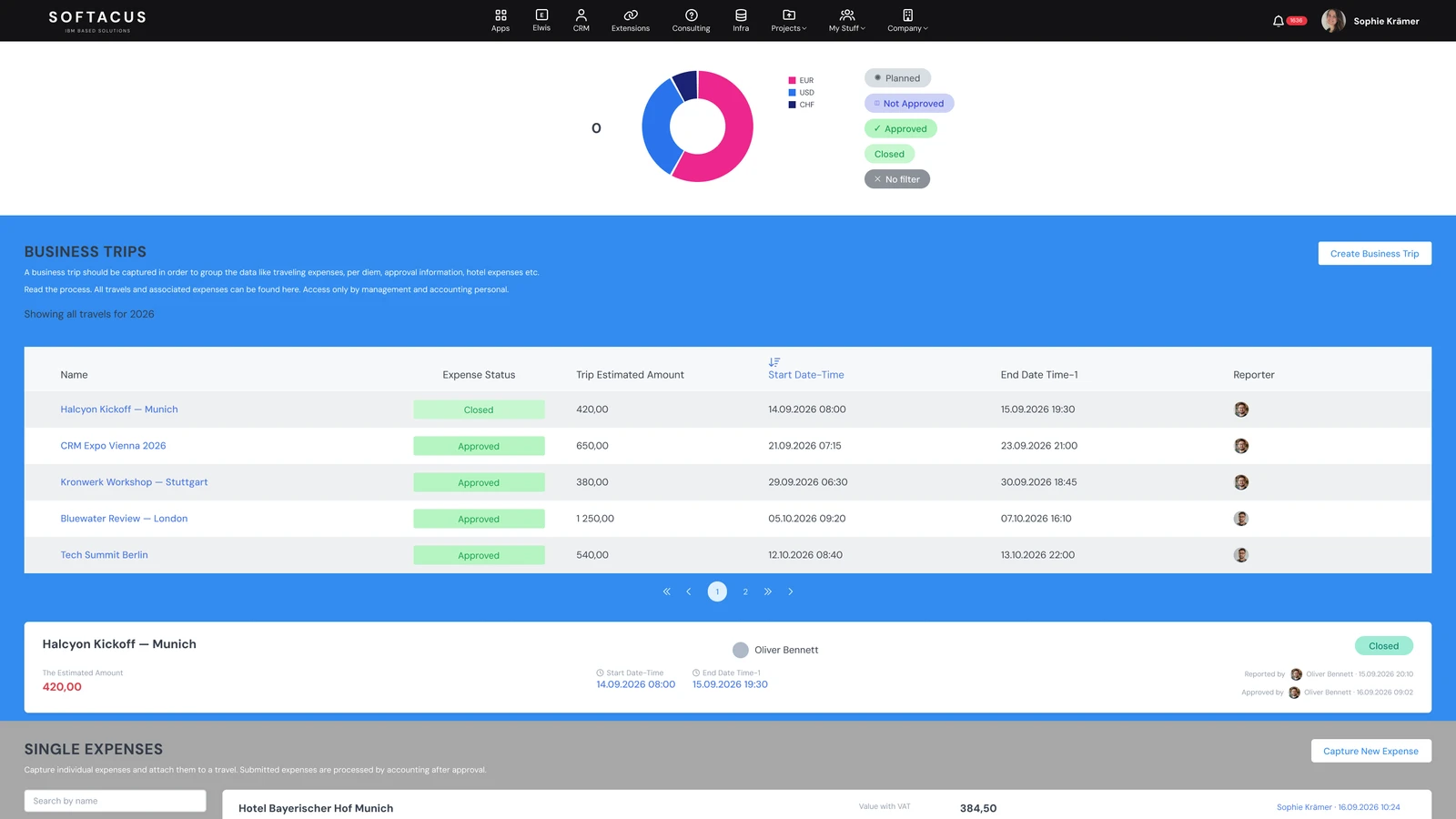
FINANCE
Travel expense claims, invoices and related documents in one place. Employees submit expenses, attach documents and track approval status, while managers get visibility into project costs without relying on separate systems.
The solution
Every build starts the same way: map how the team actually works, then model it in ELWIS — custom development blended with a powerful no-code layer.
Page Builder
Compose screens and workflows visually — with role-based views for administrators and participants.
Configurable Type System
Artifact types, link types and attributes model companies, deals, quotes, invoices, projects and teams.
Client-owned governance
The client creates and edits artifacts, artifact types and attributes directly — without relying on developers.
Before / After
One platform instead of six systems — the same data for sales, finance and operations.
Area
Before
After ELWIS
Customer data
Spread across six systems and team-specific spreadsheets, with no single view of the customer.
One shared platform — every record from lead to invoice connected to the same customer.
Quotes & invoicing
Quotes took 45 minutes of manual work; invoicing meant transferring data by hand.
Quotes in 10 minutes from stored data; the sales-to-invoice handover is fully automated.
Reporting
Preparing management reports took six hours a week across departments.
Real-time dashboards — reporting preparation down to 30 minutes a week.
Collaboration
Email and spreadsheets between sales, finance, marketing and operations.
Shared workflows and data — every department works from the same source of truth.
How it works
The complete business day in one platform — from customer view to decision.
1
Open the day's view
Customers, opportunities, tasks and updates in one place.
2
Update customers and deals
Leads, notes and deal progress recorded centrally.
3
Create quotes
Offers from stored data, straight into orders and invoicing.
4
Coordinate delivery
Projects, tasks and time tracking per customer.
5
Keep finance aligned
Invoices, payments and records tied to deals.
6
Review and plan
Shared dashboards guide the next decisions.
Softacus CRM was delivered in six months — around 1,200 working hours for a platform of 120+ screens, now used by more than 100 people across sales, finance, marketing and operations.
1,200
Working hours
120+
Screens in the application
6
Months to delivery
100+
Active users
Security & access control
Role-Based Access Control
Users only see and edit the customers, finances and processes their role permits.
Single Sign-On (SSO)
Authentication through the organization's identity provider and corporate credentials.
Two-Factor Authentication
An extra verification step at login protects business data from unauthorized access.
Secure API & Webhook Access
External systems connect through authenticated APIs for controlled data exchange.
“
Our teams stopped switching between systems and started working from one shared source of truth.
Slavomira, Business Operations Specialist — Softacus AG
Conclusion
Built on ELWIS's configurable Type System, the platform grows with the business — new modules, roles and workflows can be added without rebuilding the foundation.
PLANNED NEXT
Workflow Automation
AI Assistant
AI Insights
Predictive Reporting
01
One source of truth
Customer, sales, finance and operational data in one system.
02
Faster processes
Quotes, invoices and projects flow without manual handovers.
03
Less administration
Duplicate entry minimized through centralized data.
04
Better collaboration
Five departments on one platform instead of email and files.
05
Business visibility
Real-time dashboards for faster, data-driven decisions.
Book a 45-minute session tailored to your industry, team size, and deployment requirements. No generic pitches—just real answers from a solutions engineer.